Other · Other
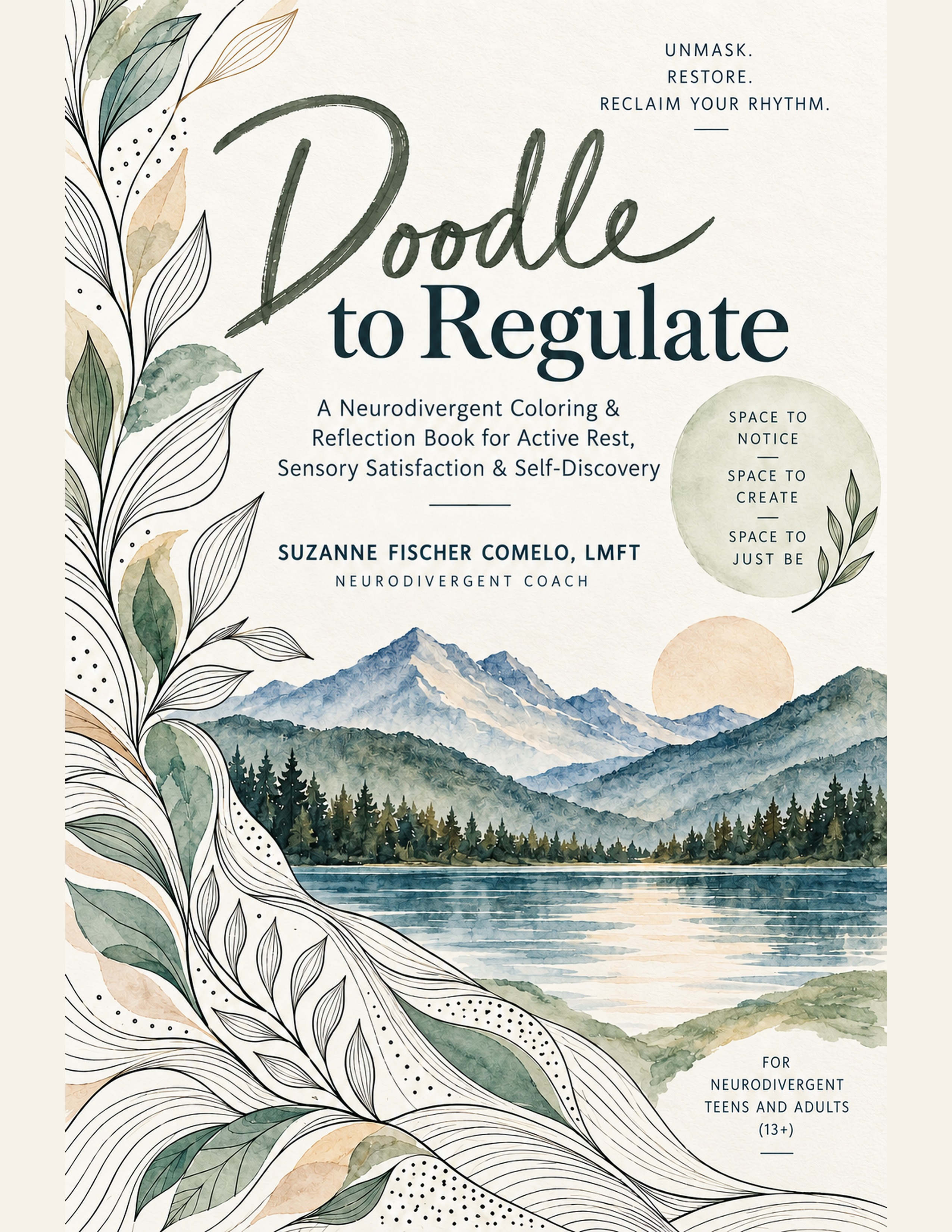
DOODLE TO REGULATE
A Neurodivergent Coloring & Reflection Book for Active Rest, Sensory Satisfaction & Self-Discovery
About This Book
Rest doesn’t always have to mean doing nothing.
For an active neurodivergent brain, being told to “just relax” or “clear your mind” may not feel particularly restful at all. Sometimes our brains need something to rest with.
Doodle to Regulate is a neurodivergent-affirming coloring, doodling, and reflection book created for teens and adults who may find active rest more accessible than traditional ideas of relaxation. Through simple patterns, open-ended creative invitations, spacious drawing areas, and gentle reflection prompts, the book offers opportunities to explore what feels satisfying, engaging, grounding, or restorative to your own nervous system.
There is no right way to use these pages. Color inside the lines—or don’t. Continue a pattern, change it, cover it, doodle something entirely different, or stop whenever you’ve had enough. Your nervous system doesn’t owe this book a completed product.
Created by Suzanne Fischer Comelo, LMFT, Neurodivergent Coach, Doodle to Regulate draws on a neurodivergent-affirming approach that values curiosity over judgment and recognizes that rest, regulation, creativity, and sensory satisfaction can look different for different people.
Designed for neurodivergent teens and adults (13+), including ADHD, autistic, and AuDHD readers; highly sensitive people (HSPs); and late-identified neurodivergent adults—as well as anyone who enjoys repetitive, tactile, sensory, or visually satisfying creative activities.
Space to Notice. Space to Create. Space to Just Be.
Preview Chapter
Welcome I created this book from something simple that I have returned to again and again: putting marker to paper, repeating shapes, filling white space, watching color spread, and allowing an image to take shape without needing to know where it is going. For me, doodling can be tactile, visual, repetitive, absorbing, playful, and deeply satisfying. But this book is not here to tell you what should feel regulating. Your nervous system gets a vote. You may love tiny spaces or broad strokes. You may crave repetition or novelty. You may want every bit of white covered, or you may want to leave half the page untouched. You may feel calmer, more energized, more focused, restless, frustrated, delighted, or nothing in particular. All of that is information. My work as a neurodivergent coach centers on honoring the unique strengths and needs of neurodivergent nervous systems, building sustainable strategies around authenticity and capacity, and creating spaces that allow people to thrive. This book brings that same spirit to creative play. Go gently, Suzanne
Active Rest Rest doesn't always have to mean doing nothing. For an active neurodivergent brain, being told to "just relax" or "clear your mind" may not feel particularly restful at all. In fact, it can sometimes have the exact opposite effect. Sometimes our brains need something to rest with. A little movement. A little repetition. Something interesting enough to hold our attention without requiring us to perform, achieve, solve, or produce. For some neurodivergent people, active rest may be easier to access when the brain or body has something gentle, repetitive, interesting, or sensory to do. Doodling. Coloring. Knitting. Puzzling. Walking. Rocking. Building. Repeating a familiar movement. Making something with your hands. The activity itself may be different for each person. The invitation is to notice the difference between an activity that asks something from you and one that gives your brain just enough to do while asking very little in return. Maybe filling one shape after another gives your eyes somewhere to land. Maybe repetition gives your hands somewhere to put their energy. Maybe watching the white disappear gives your brain a tiny, satisfying sense of movement and completion. Rest doesn't have to look still. Sometimes rest isn't about doing nothing. Sometimes it's about finding the right amount of doing. As you work through this book, you might occasionally ask: Did this feel like work, play, rest, or something else? Was there enough stimulation to hold my attention? Too much? Too little? Did my brain feel occupied without feeling demanded of? There is no correct answer. Notice what is true for you.